Tucked away in southern Granville County, the Camp Butner Museum preserves one of the most remarkable wartime mobilization stories in North Carolina history. Located just minutes from the Research Triangle, this community museum documents the rapid transformation of quiet farmland into a bustling training ground that processed roughly 250,000 soldiers during World War II.
What Makes the Camp Butner Museum a Must-Visit for WWII History Buffs?
Most travelers driving along Interstate 85 pass right by Butner without realizing that the town itself owes its existence entirely to World War II. The Camp Butner Museum stands out because it focuses on grassroots history, showing how global conflict altered the fabric of rural America.
Instead of generic textbook accounts, the museum presents local, human-scale narratives. You will discover how a temporary military installation became a permanent community, complete with hospitals, training ranges, and prisoner-of-war compounds. For anyone interested in military heritage, it serves as an intimate counterpoint to larger, crowded national military parks.
From Rural Farmland to Massive Training Center: The Camp Butner Story
In early 1942, shortly after the attack on Pearl Harbor, the United States Army acquired over 40,000 acres spread across Granville, Person, and Durham counties. Within months, construction crews built thousands of wooden barracks, mess halls, firing ranges, and support facilities. The land had belonged to generations of local farming families, many of whom were given only weeks to vacate their homesteads to support the national defense effort.
At its operational peak, Camp Butner functioned as a fully equipped military city capable of housing more than 30,000 troops at any given time. Infantry units trained here in obstacle courses, gas defense, and live-fire tactics before deploying overseas. The base also housed thousands of German and Italian prisoners of war, who performed agricultural labor and logistical work throughout the surrounding region until the end of hostilities.
Authentic Uniforms, Gear, and POW Artifacts on Display
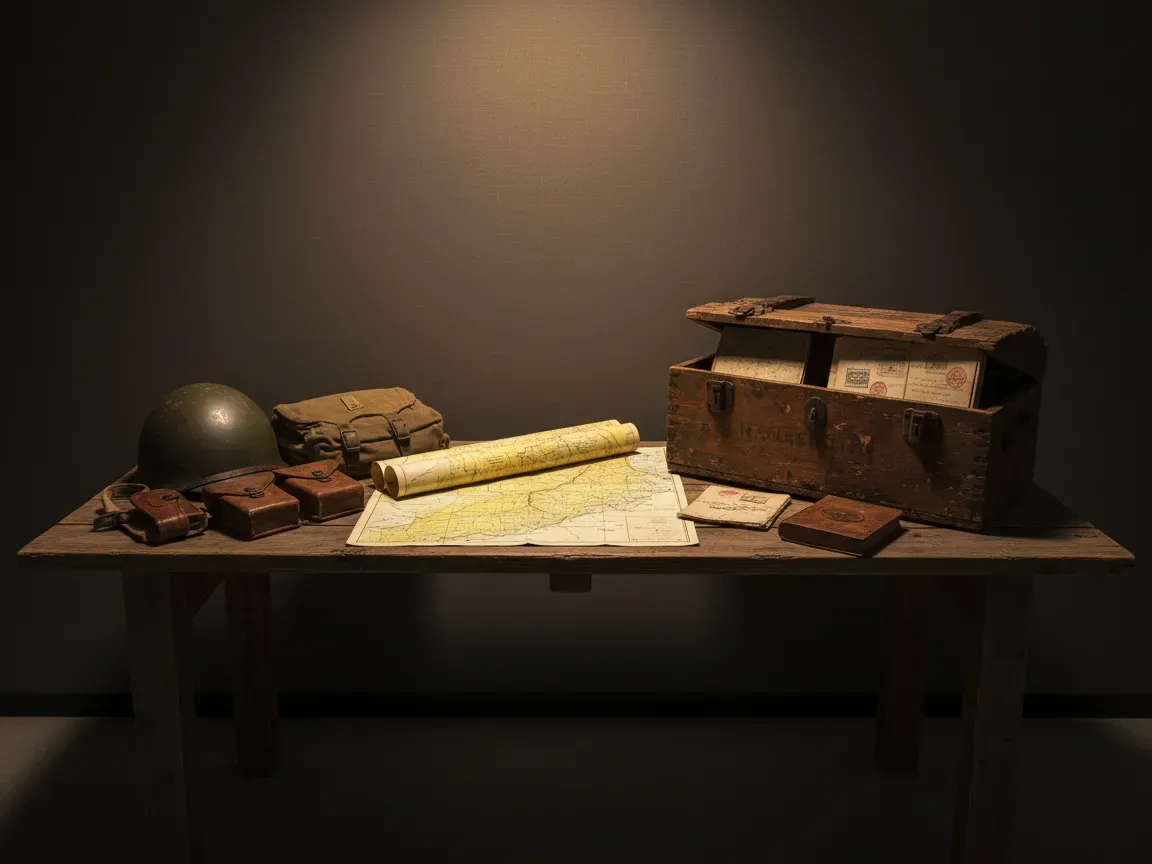
The museum interior is packed with authentic artifacts donated by veterans, local families, and collectors. Rather than keeping items behind sterile barriers, the displays provide a vivid look into daily camp life:
- Original service uniforms, field gear, helmets, and personal footlocker items belonging to recruits who completed basic training at Butner.
- Archival maps showing the original footprint of the cantonment, tank training grounds, and rifle ranges across the Piedmont landscape.
- Handwritten letters, camp newspapers, and photographs documenting morale, entertainment, and training routines.
- Rare craftwork, identification badges, and everyday objects crafted by German and Italian prisoners of war interned on the grounds.
These objects capture not just the military machinery, but the emotional realities of young Americans preparing to face combat across Europe and the Pacific.
The 78th “Lightning” Division: From Butner to the Rhine
Among the primary combat formations shaped at the facility was the 78th Infantry Division, nicknamed the “Lightning Division.” Re-activated at Camp Butner in 1942, these soldiers spent months enduring rigorous field exercises across the rolling hills of the Carolina Piedmont before heading to the European theater in late 1944.
The museum honors the division’s path from the red clay of Butner directly into heavy combat during the Battle of the Bulge and the eventual drive toward the Rhine River. Exhibits detail their crucial role in capturing the Ludendorff Bridge at Remagen, reminding visitors that the tactical skills that helped end the war in Europe were forged in this small North Carolina community.
How to Plan Your Visit to the Museum in Butner, North Carolina?
The Camp Butner Museum is housed inside the Soldiers Memorial Sports Arena in downtown Butner, located just off I-85 north of Durham. Planning your stop requires a little forethought, as the facility operates with community-focused hours:
- Operating hours: The museum is generally open on select weekdays and the first Saturday of each month, or by appointment for tour groups.
- Admission: Entry is free, though donations to help preserve the archives and maintain exhibits are warmly welcomed.
- Parking: Free, accessible parking is available right outside the main sports arena entrance.
- Navigation: Pair your visit with a self-guided drive through town to spot remaining original concrete water towers, converted warehouses, and historic street layouts dating back to the 1940s.
Nearby Historic Sites to Add to Your Piedmont Road Trip Itinerary
Because a visit to the Camp Butner Museum takes between one and two hours, it pairs naturally with other historical stops across Granville and Durham counties:
- Bennett Place State Historic Site: Just twenty minutes south in Durham, this historic farm marks the site of the largest troop surrender of the American Civil War in April 1865.
- Historic Downtown Oxford: Located fifteen miles north, Oxford features tree-lined streets, antebellum architecture, and the Granville County Museum.
- Duke Homestead: Explore the early origins of North Carolina tobacco farming and manufacturing on this preserved nineteenth-century property in nearby Durham.
Preserving Piedmont Wartime Memories for Modern Travelers
Stopping at the Camp Butner Museum offers a clear look at how quickly an entire region mobilized when national survival was on the line. The quiet streets of Butner still reflect the orderly grid designed by Army engineers, showing that modern suburban communities often sit atop forgotten wartime infrastructure.
Taking an afternoon detour off the highway connects you directly to the generation that left these training ranges for foreign battlefields. It is an easy, rewarding excursion that enriches any road trip through central North Carolina with genuine historic perspective.

Author: Mia Sinclair
Mia has visited over 50 countries on a shoestring budget. She shares her hard-won secrets on how to find the best flight deals, pack efficiently, and experience destinations like a local, proving that you don't need a fortune to see the world.